EU agrees 1.8bn-euro loan to cash-strapped Ukraine
The EU has agreed a €1.8bn (£1.3bn; $2bn) loan to Ukraine - described as a landmark deal for a non-EU member.
The agreement was signed at an EU summit in Riga, Latvia, between the leaders of the 28-member bloc and six post-Soviet nations.
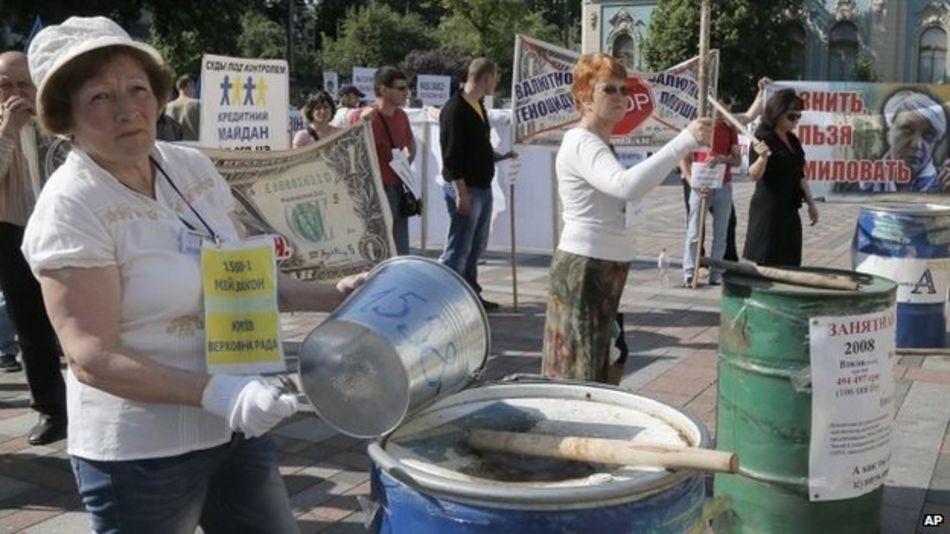
The loan aims to help cash-strapped Ukraine implement economic reforms, as fighting with pro-Russian rebels in the east has taken a heavy toll.
A crackdown on corruption is part of the conditions for the loan.
In other developments on Friday:
- Amnesty International released a report, saying it had found evidence that both sides in the Ukrainian conflict were torturing prisoners, and that the rebels were conducting summary executions
- Russia said it was taking all necessary steps to free two of its citizens recently captured in Ukraine. The two men earlier confessed to being members of the Russian armed forces, tomediators of the Organization for Security and Co-operation in Europe (OSCE).
- Ukraine said three of its soldiers had been killed and another 12 injured in the past 24 hours in the east of the country
€200m grants
In Riga, the EU also pledged €200m in grants to Ukraine and the other five "Eastern Partnership" countries: Armenia, Azerbaijan, Belarus, Georgia and Moldova.
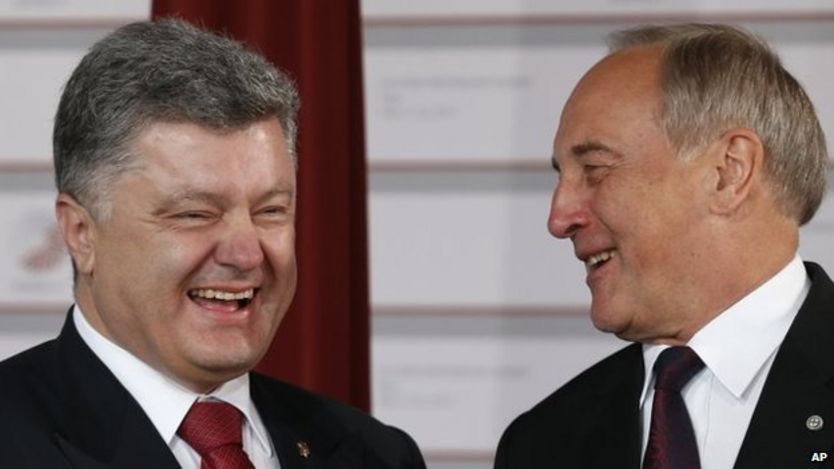
Georgia, Moldova and Ukraine are pushing for full integration with the EU, while the other three countries prefer limited co-operation with the bloc.
In addition, Armenia and Belarus are members of the Russian-led Eurasian Economic Union, seen by some analysts as a rival project to the EU.
The Riga summit declaration criticised Russia for its annexation of Ukraine's Crimea peninsula last year.
"The acts against Ukraine and the events in Georgia since 2014 have shown that the fundamental principles of sovereignty and territorial integrity within internationally recognised borders cannot be taken for granted in the 21st Century on the European continent," it said.
"The EU remains committed in its support to the territorial integrity, independence and sovereignty of all its partners."
Visa liberalisation plan
At a news conference, European Council President Donald Tusk said he wanted to be as "ambitious as possible" in granting Georgia and Ukraine a visa-free regime, provided key conditions were met. European Commission President Jean-Claude Juncker said "enormous progress" had been made on the issue.
Both countries had hoped for a positive decision on the visa issue at the Riga summit, but it will not happen until next year at the earliest.
Last year, Moldova was granted visa-free travel to the EU.
Ukraine's crisis erupted in November 2013, when the previous Ukrainian government backed away from closer ties with the EU. The mass protests sparked by that move toppled President Viktor Yanukovych and led to the conflict in the east.

Russian and Ukrainian media comment
Russian state media are sceptical about the Eastern Partnership summit.
The government daily Rossiiskaya Gazeta says the gathering is "so lacking in hope and prospects that it can only be compared to fishing without a bait".
"It promises nothing, not entry to the EU nor cancellation of visas, but it demands plenty," says the state-controlled Channel One TV.
Rossiya1 TV adds that the Eastern Partnership scheme has "outlived its usefulness".
Gazprom-Media's NTV channel echoes that pessimism, saying "there is not much to expect from this event".
In Ukraine too there is little positive media comment on the summit.
"Ukraine itself brought about the Riga summit's failure," says Yevropeyska Pravda website.
It adds that "Kiev only has itself to blame" for not implementing a visa liberalisation action plan with the EU.
Source: BBC Monitoring
Ukraine's economy continued its contraction in the first quarter of 2015, and Kiev faces huge debt repayments to its international creditors.
More than 6,000 people have been killed in fighting in eastern Ukraine that began in April 2014 when rebels seized large parts of the Donetsk and Luhansk regions. This followed Russia's annexation of the Crimea peninsula.
The Ukrainian government, Western leaders and Nato say there is clear evidence that Russia is helping the rebels with heavy weapons and soldiers. Independent experts echo that accusation.
Moscow denies it, insisting that any Russians serving with the rebels are "volunteers".
Comments